Funny Redneck Poems Ron Rash Poems 20 Lines

See a Problem?
Thanks for telling us about the problem.
Friend Reviews
Reader Q&A
Be the first to ask a question about Poems
Community Reviews


When I say that Rash can flat out write and switch genres seamlessly, I do not say this lightly as there are few authors today who I find can switch genres and still produce quality work. Coincidently, the last author I noted this about is also a premier poet, current United States poet laureate Tracy K Smith. Perhaps there is something to be said about gifted poets switching over to novels or memoirs; their words dance lusciously off of the pages, and I am fortunate to be in their world for a few hours. Rash's work is like this.
In this cross section of his poetry, Rash transports his readers to Western Carolina along the Jocasee River near the town of Laurel along the Tennessee border. His poems are biographical about the generations of his family who have farmed and worked the land up until present day. Some remained as farmers whereas other worked in the Eureka Mill, which produces bed sheets. The poems shared the themes of hard work of the land with a hint of southern style gothic and a dose of southern religion. Even though the words are beautiful, they are deep and soul searching, and one can see that they are a labor of love, again a pure joy to read.
Ron Rash's work is earning his keep as a top Southern writer today. It would most likely be a privilege to enroll in one of his literature seminars knowing that one could learn from a master of his craft. This unexpected gem- because crossing genres I did not know what to expect- made me realize how much I enjoy Rash's work and it is safe to say that I will be reading more of his blissful prose sooner rather than later.
4 shining stars
...more
april is national poetry month,
so here come thirty floats!
the cynics here will call this plan
a shameless grab for votes.
and maybe there's some truth to that—
i do love validation,
but charitably consider it
a rhyme-y celebration.
i don't intend to flood your feed—
i'll just post one a day.
endure four weeks of reruns
and then it will be may!
**************************

RON RASH!!!
TAKING DOWN THE LINESHAPPY POETRY MONTH!They tore the telephone lines
from the valley like unhealed
stitches, poles and wires ha
april is national poetry month,
so here come thirty floats!
the cynics here will call this plan
a shameless grab for votes.
and maybe there's some truth to that—
i do love validation,
but charitably consider it
a rhyme-y celebration.
i don't intend to flood your feed—
i'll just post one a day.
endure four weeks of reruns
and then it will be may!
**************************
RON RASH!!!
TAKING DOWN THE LINESThey tore the telephone lines
from the valley like unhealed
stitches, poles and wires hauled off
through which voices had once flowed
across Jocassee like freshets
crisscrossing, running backward
into far coves where one phone
might be shared by five families.
In those lines was sediment
of births and sickness, deaths,
love vows and threats, all passed on
mouth to mouth, vital as breath
before silenced in the lake's
currents of lost connections.
if springsteen ever runs out of material about the vanishing american heartland and the stoicism of the working class, i'm sure ron rash would let him set some of these poems to music.*
LISTENING TO WBTAll you had to do was turn the knob
until the light clicked on and soon you'd find
rising out of static was your life.
Every time you heard "The Weave Room Blues"
or "Cotton Mill Colic No. 3" you felt
like a deer that risked a meadow, its eyes
lifted to see the barrel too late.
Someone had caught you in his sights,
hit you solid in the guts
with all the things that you had thought
you didn't want to think too long about.
But days later you'd catch yourself
humming those lines as you worked your shift.
Maybe it was the banjo and guitar,
the way they prettied up the words,
that made those songs lift up your heart
same as a Sunday morning hymn.
Or maybe in the end it was the words,
the bare-assed truth making a stand
in a voice that could have been your own.
this book gathers together a sampling of rash's poems from lit journals and previously published collections with only eight brandy-new ones. which is fine if you're like me and have bought all of his previous poetry collections but never actually read any of them. it also indicates he's been focusing more on his novel-writing than poetry lately, which is as it should be. not that his novels are superior to his poetry when it comes to writing quality; in fact, any of these poems could stand in for the descriptive passages of his novels without seeming out of place:
ABANDONED HOMESTEAD IN WATAUGA COUNTYAll that once was is this,
shattered glass, a rot
of tin and wood, the hum
of limp-legged wasps that ascend
like mote swirls in the heatlight.Out front a cherry tree
buckles in fruit, harvested
by yellow jackets and starlings,
the wind, the rain, and the sun.
but i figure novels pay more bills than poetry does, even narrative poetry that reads like short stories:
BEARINGSHe's scraped manure off his boots a last time,
filled the front room with what he has chosen
to keep on owning. He's alone, his uncle gone,
gearing back through the hills upwinding into
the gasping curves and drops of the mountains.He stands on the porch, no work until tomorrow,
millhouses planted like corn rows each way he
looks, Eureka's water tower rising above as if
a hard high-legged scarecrow. He steps down on
the strange level road, walks west toward town.He finds a grill, asks for what he's memorized:
a hamburger and a Coke and his change. Outside
in the loud afternoon, he stares into windows
until he sees shoes. The clerk takes his bills
and grins when my grandfather asks for a poke.He walks out toward Eureka's smoke and rumble,
toward the millhouses crouched and huddled in
the mill's shadow, and soon finds he is lost.
Each house might be his or maybe the next one,
and he walks an hour before he finally asks.He tells the man he is looking for James Rash,
a friend who's just moved here. The man says
Tommy Singleton got fired last week. I'd bet
that's where your friend is at and points to
a house, and so my grandfather found himself.He stayed inside till the whistle woke him up,
and threw his boots on the roof so they might
guide him back those first evenings and later
the Saturday nights he weaved under moonshine,
searching roof after roof trying to find home.
or:
WOLF LAURELTree branches ice-shackled, ground
hard as an anvil, three sons
and a father leave the blaze
huddled around all morning,
wade snow two miles where they cross
Wolf Laurel Creek, poke rifles
in rock holes, cliff leans hoping
to quarry what's killed five sheep,
but no den found as the ridge
sips away the gray last light
of winter solstice, and they
head back toward home, the trail
falling in blur-dark and then
the father falls too, eyes locked,
wrist unpulsed, the sons without
lantern, enough lingering light,
know they must leave him or risk
all of them lost, know what waits
for death in this place, so break
a hole in Wolf Laurel's ice,
come back at first light to find
the creek's scab of cold covered
with snow-drift, circling paw prints
brushed away that sons might see
a father's face staring through
the ice as through a mirror.
thematically, the poems are what you'd expect as a fan of ron rash: nature, the cost of progress, poverty, struggle, quiet men and strong women, young deaths borne stoically, cotton mills, family, hardship, unexpected beauty… all those great steinbeckian ideals on display where men are men and work is hard:
POCKETKNIVESCarried like time, consulted
as often when the sermon
droned on past noon, hay bailer
broke a chain, any other
lingering moments their scarred
and calloused workflesh idled,
the blades pried free the way wives
might slip a ribbon, that same
delicate tug when forge-craft
sharpened what light sun or bulb
provided as they trimmed dirt
from the undersides of nails,
surfaced splinters, bled blisters,
a tool but more than a tool
each time they rasped a whetstone
across steel until it flashed
pure as silver, then a rag
doused in oil to rub new-bright
the handles hewed from antler,
pearl, hardwood and ivory
laced with brass or gold, the one
vanity of men caught once
when dead in a coat and tie,
so ordered from catalogs,
saved and traded for, searched for
in sheds and fields if lost, passed
father to son as heirlooms,
like talismans carried close
though most times, cloaked as the hearts
of these men who rarely spoke
their fears and hopes, let their words
clench inside a locked silence.
his words ring with that much-disparaged word "authenticity," but it's appropriate here, and there's something both careworn and fresh about these passages that is undeniably powerful, even if you're not usually a fan of poetry:
THE WATCHAlmost like a scythe, the sweep
of mesh through creek-pool, that slow
harvest of dace and crayfish,
the homemade seine held between
my brother and me, worked deep
in each undercut, sinkers
scraping white sand like a rake,
and this morning a subtle
bowing, then give, bringing up
a gold watch three decades dropped
from our grandfather's pocket,
lost in his field, freshet-swept
to this pool some longback spring.
My knife blade pries open time
like a clam, water spilling
out lost hours, and though I try
with shake and stem wind to rouse,
the hands do not move, remain
at six-thirty, one placed on
the other like dead man's hands.
THE CORPSE BIRDBed-sick she heard the bird's call
fall soft as a pall that night
quilts tightened around her throat,
her gray eyes narrowed, their light
gone as she saw what she'd heard
waiting for her in the tree
cut down at daybreak by kin
to make the coffin, bury
that wood around her so death
might find one less place to perch.
and for greg:
THE FOXTwo months before he died my uncle saw
a red fox near the field edge where he plowed,
watching him, its tongue unpanting though
the August heat-haze waved the air like water.That night he claimed it was his father, then laughed
as if he wasn't serious, as if
all summer long we hadn't watched his face
grow old too quick, gray-stubbled, sudden-lined.His wife would try the last days that he lived
to get him to the hospital but he
took to his bed, awaited the approach
of padded feet, coming close, then closer.
many of these poems explore his hometown and his own family's past, of which this one is the most poignant:
PHOTOGRAPH OF MY PARENTS OUTSIDE EUREKA COTTON MILL. DATED JUNE 1950Back against the chain-link fence,
my father's muscled left arm twists
like vine that sprouts a wire-meshed fist.
My mother leans into his chest.
She's known him a month, cannot guess
what I will see, at least not yet,
in my father's odd pose, the fingerless
awkward clutch of metal, as if
caught in Eureka's sprung-steel grip.
it's a fantastic collection overall, and a good atmospheric table-setting before i dive into The Risen: A Novel next week. i'm going to leave you with this one, which along with pocketknives is my favorite in the collection, and a nice warm nostalgic image-heavy piece to leave lingering in the brain as you go about your day:
WATAUGA COUNTY: 1962Smell of honeysuckle bright
as dew beads stringing lines on
the writing spider's silk page,
night's cool lingering, the sun
awake but still lying down,
its slant-light seeping through gaps
of oak branches as the first
blackberry pings the milk pail's
emptiness, begins the slow
filling up, the plush feel of
berries only yesterday
red-green knots before steeped in
dark to a deep purple hue,
and as dawn passes, the pail
grows heavy, wearies my arm
until I sit down inside
that maze of briar I make
my kingdom, lift to my mouth
the sweet wine of blackberry,
my hands stained like royalty.
*i am in no way a spokesperson for ron rash, bruce, so you should probably ask before you rent the studio space, but you're springsteen - who's gonna say no to you?
 come to my blog!

Those readers who have admired the prose of Ron Rash should welcome the publication of Poems: New and Selected from the ecco imprint of Harper Collins. This volume of beautifully haunting verse contains poems from each of Rash's previously published collections of poems: Eureka Mill, Raising the Dead, Among the Believers, and Waking, with equally captivating new poems.
Rash's poems are rich in the distillation of memory of place, people, natu
Poems: New and Selected, Ron Rash's Appalachia in VerseThose readers who have admired the prose of Ron Rash should welcome the publication of Poems: New and Selected from the ecco imprint of Harper Collins. This volume of beautifully haunting verse contains poems from each of Rash's previously published collections of poems: Eureka Mill, Raising the Dead, Among the Believers, and Waking, with equally captivating new poems.
Rash's poems are rich in the distillation of memory of place, people, nature, and the course of life from birth to death. The expected and unexpected departure of family, friends, and those bound in life through the the community they shared.
The lines of these poems scan perfectly, at times almost seeming to embrace the rhythm of folk ballads and old gospel hymns. The streams and mountains of western North Carolina are captured in indelible imagery through language that is readily accessible, as one might share a colloquial conversation with a neighbor sharing time slipping a line into a trout stream or leafing through one's family Bible at a reunion of relatives tracing a long and hard history of life through ever changing times.
In the collection Raising the Dead readers familiar with Rash's first novel One Foot in Eden will recognize the theme of a way of life lost through the flooding of land to bring progress through generating electrical power. Water emerges as a symbol of death and destruction. These poems are perhaps the most powerful in this collection.
Through Eureka Mills and Among the Believers Rash uses water as a symbol of life and resurrection, a necessity for the baptism of the human soul and a necessity for the growth of essential crops.
Ron Rash serves as historian, naturalist, biographer, and balladeer that serves to bring Appalachia past and present to life. These are lines of verse to read aloud, to hear the perfect lyricism that will remind you of the work of poets such as Wendell Berry and former Poet Laureate Ted Kooser.
Be haunted by the lines of "In Dismal Gorge," in the waterfall country of western North Carolina.
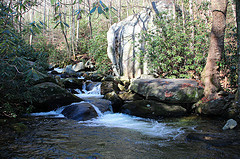
On the Dismal Falls Trail
The lost can stay lost down here,
in laurel slicks, false-pathed caves.
Too much too soon disappears here.On creek banks clearings appear,
once homesteads. Nothing remains.
The lost can stay lost down here,like Tom Clark's child, our worst fears
confirmed as we searched in vain.
Too much too soon disappears.How often this is made clear
where cliff-shadows pall our days.
The lost can stay lost down here,lives slip away like water.
We fill our Bibles with names.
The lost can stay lost down here.
Too much too soon disappears.
Then celebrate the joy of hopefulness and homestead in "Brightleaf."
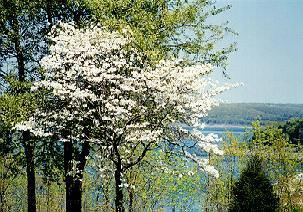
Here a bride planted hundreds
of dogwoods, so coming springs
branches flared with white blossoms,
waking an orchard of light
against that bleak narrative
of place name, a life scratched out
on ground as much rock as dirt.
Decades passed as she raised what
might look from distant summit
like a white flag unfurled, though
anything but surrender.
EXTRAS
Listen to Ron Rash read The Exchange from Among the Believers based on a love story in Rash's family history.
Listen to Ron Rash speak about writing poetry, novels, and short stories.
...more
Today, Rash's work enjoys slots on the bestseller lists, two film adaptations, and glowi
It's a joy to witness the blooming of Ron Rash's career. I first read a story of his over a decade ago. I bought an O. Henry anthology in Toronto, hoping to read an old teacher's entry and while away a plane journey home to England. Rash's entry ('Speckled Trout') ended up stealing the show. Before the month had ended I got hold of his novels and story collections from sellers in the US, and enjoyed them all.Today, Rash's work enjoys slots on the bestseller lists, two film adaptations, and glowing reviews on our side of the Atlantic from Irvine Welsh and others. Canongate publish Rash's recent fiction, but have yet to print any of his poetry. For UK readers this volume was sorely needed. It's also a rare exception to modern American poetry, in that it isn't formless, self-obsessed or dull.
Les Murray once said publishing a Selected Poems was like having your life put on trial. I doubt any Judge could convict Rash of anything except for writing well, and consistently. This volume reprints selections from Rash's three earlier volumes, with more recent verse crowning the whole. If I don't see much progression from front to back, that's really because there doesn't need to be. Rash's poetry hits its stride early on.
His subject matter is his native turf, Appalachia, which he surveys without condescension, stereotype or hysteria. I imagine that has drawn comparisons with Cormac McCarthy and Breece D'J Pancake, but the comparison misleads. There is a serenity in Rash's work, a timelessness. Melodrama is outlawed; people and scenes are trusted to speak for themselves. In this he seems to have more in common with the Orcadian poets George Mackay Brown and Edwin Muir. (A Muir poem, 'One Foot in Eden', provides the title for Rash's first novel.)
Poetry doesn't have to rhyme any more than a football team has to play four-four-two, but Rash's work has an impressive feel for form. Some of his poems derive from cynghanedd - a sound arrangement from Welsh-language poetry. One poem is even titled 'From the Mabinogion':
and like snow warmed by the sun
all they had seen and suffered
melted away. No sorrow
could harbor inside that hall.
Although he pays sincere tribute to his Celtic forebears, Rash is honest enough to grant how ancestor-worship and history-fixation sour into feuds that divide generations and fuel atrocities, as in his poems mourning the American Civil War.
Rash is not one of those poets that thinks being unintelligible is a vital part of the job. He does not spout foreign languages, wag a wizened finger at people whose lives he doesn't understand, nor think the stuff of everyday life is unworthy of poetry. His language is as clear as dawn air:
As though shedding an old skin,
Fall Creek slips free from fall's weight ('Fall Creek')
Water-flesh gleamed like mica:
orange fins, red flank spots, a char
shy as ginseng ('Speckled Trout')
Other poems, especially from the Eureka Mill collection, deliver a narrative thrill largely absent from modern verse:
those lives all lived as gears
in Springs' cotton mill
and let me not forget
your lives were more than that. ('Invocation')
Those first nights when I got back home
I swear I could barely raise my fork.
I'd fall asleep with my works clothes on,
still weary when the whistle blew. ('The Stretch-Out')
I could go on quoting, but I would hate to spoil poems like '1934', 'Brown Lung', 'First Shift' and 'Bonding Fire.'
Ron Rash is a wonderful writer and this book is a superb addition to his oeuvre. In a just world, people would toast his birthday on Rash Night every year.
...more


A friend recommended this hauntingly
Ron Rash composes beautiful Carolinian ballads, voices singing narratives of an overlooked South: life in Appalachia and mill towns. The selections captured native voice and tone so perfectly that I often forgot I was reading poetry, becoming lost in the dialogue of Rash's poignant lyricism. He unveils his treasures by threading together local histories with the lore from a few generations back, ultimately capturing the core of the Southern persistent spirit.A friend recommended this hauntingly beautiful collection of poetry. I couldn't put it down, yet I didn't want it to end. It seems that the only solution to such a problem is to purchase a personal copy.
...more 


Rash is one of my top five authors of all-time. As usual, he did not let me down! Encore! ...more

Read the full review at the Chicago Review of Books: http://chireviewofbooks.com/2016/03/1...
Ron Rash writes poems for the flawed and for the worst of us. Again and again he finds quiet, broken folks and tells their stories with stoic simplicity, with language that's both barren and lush as the change of seasons. His pastoral death poems are anti-hero and anti-love. They're all Appalachia and awe-inspiringly beautiful.Read the full review at the Chicago Review of Books: http://chireviewofbooks.com/2016/03/1...
...more


Here's the opening to one of the best poems in the book, "Under Jocassee":
One summer morning
This is that time of year where the nights become longer and early afternoon sun seems to linger in the sky longer than ever; where leaves coat the pavement in red-and-orange fractal patterns. It's a great time of year for poetry, especially poems by North Carolina native Ron Rash, who focuses on quiet moments, the short distance between life and death, the impact that landscapes have on the human heart.Here's the opening to one of the best poems in the book, "Under Jocassee":
One summer morning when
the sky is blue and deep
as the middle of the lake,
rent a boat and shadow
Jocassee's western shoreline
until you reach the cove that
once was the Horsepasture River.
Now bow your head and soon
you'll see as through a mirror
not a river but a road
flowing underneath you.
It's an eerie image--a road far beneath the water, hinting at a submerged past. This is one the most important aspects of Rash's writing--the past is still there, lurking slightly under the surface, not at all hard to find.
In other poem, "Black-Eyed Susan", we meet an elderly farmer who lives next to a cemetery, and one day finds a Black-Eyed Susan with an attached note that has blown onto his property:
Always was all that is said,
which said enough for I knew
what grave that note belonged to,
and knew as well who wrote it,
he and her married three months
when he died, now always young,
always their love in the first bloom,
too new to life to know life
was no honeymoon. Instead,
she learned that lesson with me
His wife has left the note on her former lover's grave, and he's constantly that a part of her heart still yearns for another. After his wife passes away, the farmer makes a visit to the graveyard:
I'll cross the pasture, make sure
her stone's not starting to lean,
if it's early summer bring
black-eyed susans for her grave,
leave a few on his as well,
for soon enough we'll all be
sleeping together
Those last lines are funny and bleak in equal measure. Rash loves to tell us a sentimental story that ends on a bittersweet note. In "In the Barn", the narrator and his cousin sneak into a barn to escape a storm:
We settled as well, let straw
pillow our heads as rain tucked
its loud hush tighter around us.
My cousin lay on his back,
eyes closed, hands on chest as though
already getting ready
for a wake eight years away,
Perhaps the strongest section of the book is "Eureka Mill", which focuses on the lives of workers in a Carolina mill town, farmers who fled their dying land to make a living in unforgiving factories. In "Mill Village", one worker buys a painting to hang on his ramshackle wall:
Sometimes at night if I was feeling low,
I'd stuff my ears with cotton. Then I'd stare
up at that picture like it was a window,
and I was back home listening to the farm.
Another, "Accident", sadly needs no introduction:
But her baby had been sick, kept her awake
three nights in a row. She was so tired
she barely kept her head up. When she didn't
those flyers grabbed her hair, would not let go
until her scalp came too. I guess she screamed
though who could hear her over the machines.
These mill workers wreck their bodies, their relationships, and their spirit for measly paydays. In "Black and White", we see Colonel Springs and his family posing for a Christmas photo, dressed up as workers as a gag:
The Colonel placed himself behind a cart
filled up with bobbins, arms taut, brow creased.
His wife stood behind him, her hair tied back
to authenticate the blank look on her face.
The children too pretended they were working,
leaned their lean bodies against a machine.
However, even the slimy mill owner is given a shade of humanity by Rash, in "Plane Crash", although even the Colonel's grief is a posture:
The next day he was back at work
and never showed his son has died,
so we said nothing, let him pass,
glad he understood the need
for him to act like even death
could never make him one of us.
In 166 pages of poems we get what feels like a complete overview of Carolina mountain country; the occasional joy and frequent despair of its residents, the unforgiving landscape that isolates them from the rest of the world. Rash ends his collection with a few new poems, my favorite of which is "Direction", about a late night traveler on an unfamiliar road:
but what opens the heart's need
wide as this night are the rooms
lit as if someone waits up
to give directions should you
lose your way on this bypass
back to your knowable life.

It was the section of poetry Eureka Mill which spoke to me the loudest. Being part of a cotton mill family and having been the recipient of endless "mill stories" from family members, the poetry touched me deeply.
THE FAMOUS PHOTOGRAPHER VISITS EUREKAI never read poetry. It's just not one of my preferred genres. However, it was part of my 2018 Summer Reading Challenge, and reading outside of my box is a challenge well met. A local librarian recommended Ron Rash.
That yankee photographer would sto
It was the section of poetry Eureka Mill which spoke to me the loudest. Being part of a cotton mill family and having been the recipient of endless "mill stories" from family members, the poetry touched me deeply.
THE FAMOUS PHOTOGRAPHER VISITS EUREKA...more
That yankee photographer would stop
each time a smile or laugh slipped out.
Be serious, he said. This means
much more than you can understand.
I'd climb back on the stool to reach
the frame, to work more "seriously,"
while he hid behind the camera,
reduced my life to grays and blacks.Decades later I realized why
he'd cropped the child out of that scene,
read how his photographs had changed
the labor laws across the South,
and knew no one should ever care
he denied me my humanity.


Related Articles
Welcome back. Just a moment while we sign you in to your Goodreads account.

Source: https://www.goodreads.com/en/book/show/25776683
0 Response to "Funny Redneck Poems Ron Rash Poems 20 Lines"
Post a Comment